
PRP for the spine: regenerative medicine before surgery
Image-guided platelet-rich plasma injection in Valencia — a non-surgical option for facet and discogenic pain, with Dr. Antonio Vilatela.
Platelet-rich plasma (PRP) is a regenerative medicine treatment that uses the patient’s own growth factors to reduce inflammation and stimulate repair of the spine tissues. It is a non-surgical option to consider in certain cases of facet or discogenic pain, before contemplating surgery.
What is PRP and where does it come from?
PRP is obtained from your own blood. After a simple draw, the blood is centrifuged to separate its components. The intermediate layer —the platelet-rich plasma— concentrates the growth factors responsible for the body’s natural repair processes. It is that fraction which is injected into the area to be treated.
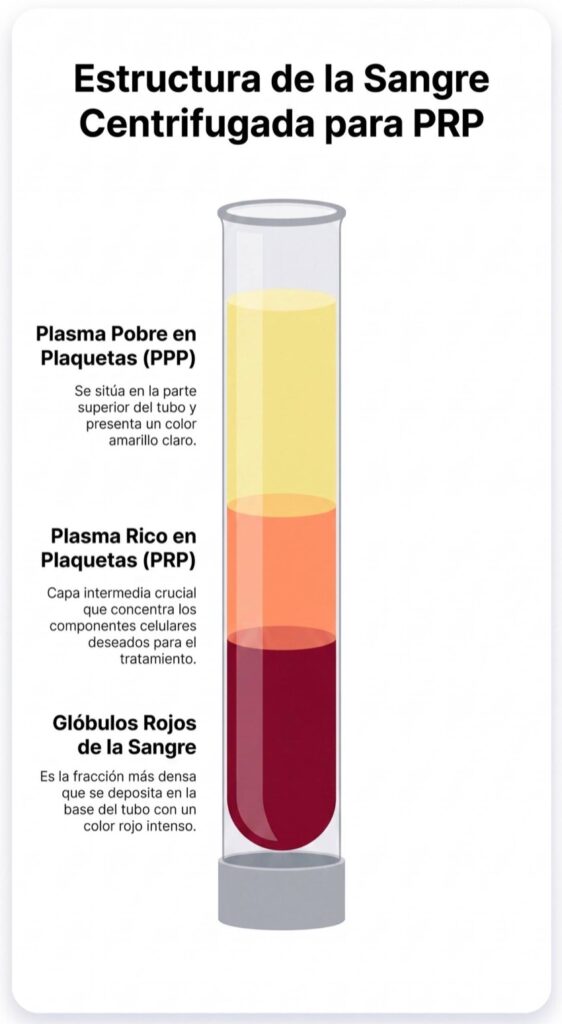
Because it comes from your own blood, PRP is autologous: it does not introduce substances foreign to the body, which minimizes the risk of rejection or allergic reaction.
How it acts on the spine
Reduces inflammation
The growth factors help calm the inflammation of the joint or disc that generates the pain.
Stimulates repair
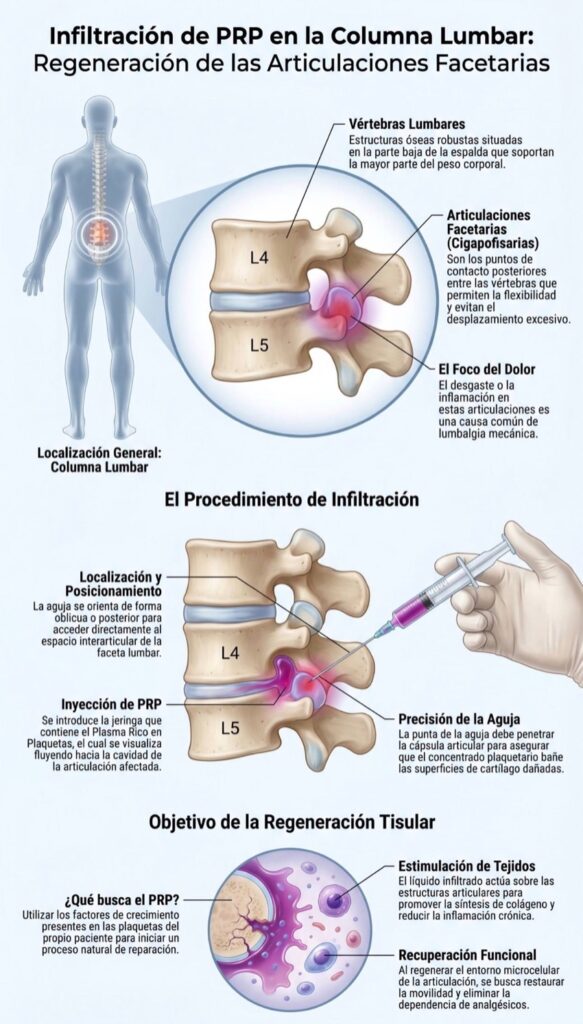
It promotes collagen synthesis and the natural regeneration processes of the damaged tissue.
Functional recovery
The goal is to restore mobility and reduce dependence on painkillers, not just mask the symptom.
Minimally invasive
It is applied through an image-guided injection, without surgery or hospital stay.
The facet injection step by step
When the pain comes from the facet joints —the small posterior joints that allow movement between vertebrae— the PRP is injected directly into them with image control, to ensure the product reaches exactly the point that generates the pain.
Who is it indicated for?
PRP does not replace surgery when it is necessary, but it is an option to consider in selected cases: facet pain (facet syndrome) lumbar or cervical; disc degeneration in early or intermediate stages; chronic spine pain that has not fully responded to physiotherapy and medication; patients who want to exhaust the non-surgical options before considering an operation.
When it is NOT the right option
Significant nerve compression with progressive loss of strength; a large extruded herniation with surgical criteria; active infection or certain coagulation disorders.
Frequently asked questions
It is not a magic cure. PRP aims to reduce pain and inflammation and stimulate tissue repair; results vary depending on the case and the degree of degeneration. It is offered with realistic expectations and always after an individual assessment.
It depends on the case. Some patients improve with a single injection; others benefit from a short course. It is defined after assessing your response.
It is an outpatient procedure with mild discomfort. Most patients return to their usual activity within a few days, progressively.
Being plasma from your own blood (autologous), the risk of rejection or allergy is minimal. Side effects are usually limited to transient local discomfort.
Is PRP an option for your spine pain?
Only an assessment with your MRI can confirm it. Dr. Vilatela reviews your case in private consultation in Valencia and explains whether regenerative medicine suits you or what the best alternative would be.